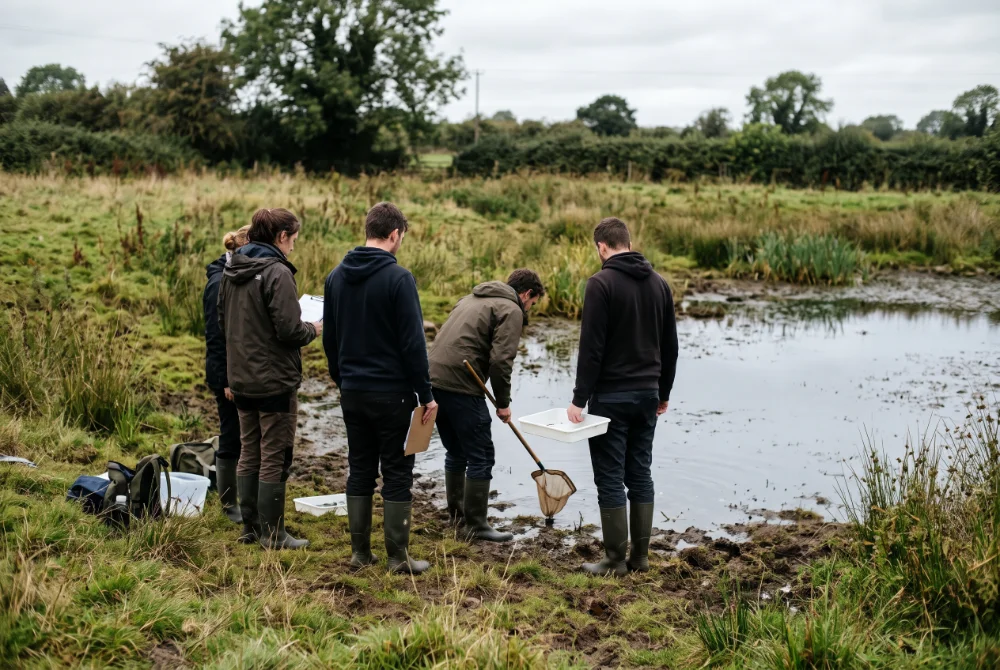
A meeting in the Burren, County Clare, has recorded two types of stonewort that are rare. These were found among a total of six different types of stonewort at one site. The find was made at Poulroe in late August 2026. It was found during an event organised as part of the Targeted Aquatic Plant Project. This is a programme run by the Botanical Society of Britain and Ireland. It is funded by the National Parks and Wildlife Service.
The two species that were found were Dwarf Stonewort (Nitella tenuissima) and Lesser Bearded Stonewort (Chara curta). Both need very specific conditions to grow: bare peat surfaces and shallow calcareous water. The turloughs and marl lakes of the Burren are the only places in the world where you can find Lesser Bearded Stonewort.
Four more species of stonewort were found at Poulroe: Rugged Stonewort (Chara subspinosa), Delicate Stonewort (Chara virgata), Hedgehog Stonewort (Chara aculeolata) and Bristly Stonewort (Chara hispida). It is interesting that six species were found in one place, but the project does not say that this has never happened before. It is a record of what is present in a habitat that is already known to be important for its wildlife.
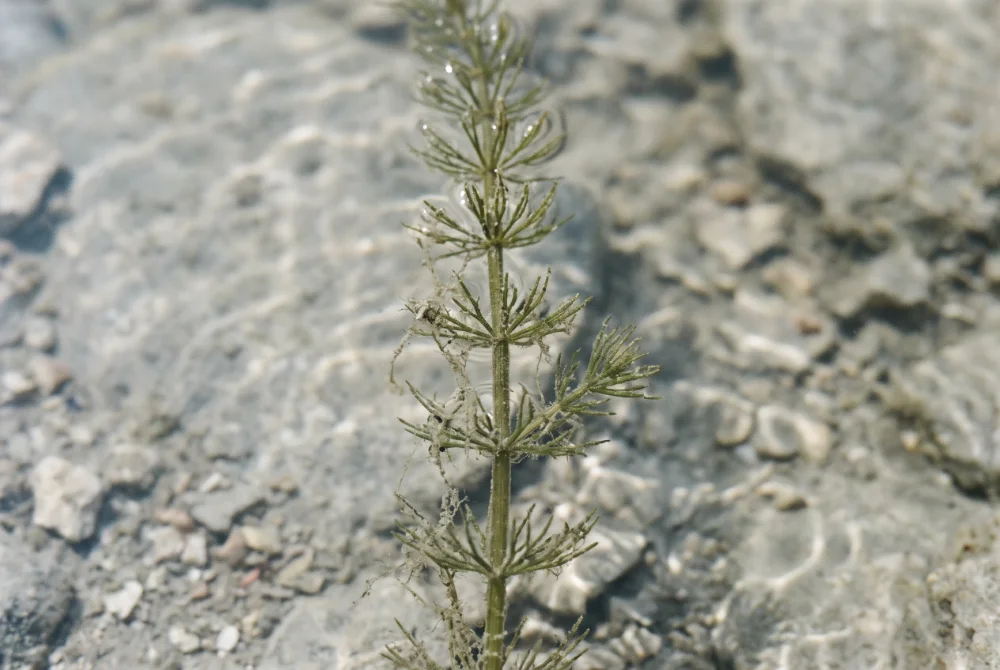
This is what stoneworts look like.
Stoneworts are not a type of plant that has vessels to carry water. These are tricky algae to identify because they have a complicated structure. They are part of a group called the Characeae family, and only people who specialise in algae know how to identify them. They grow under the water, creating plants at the bottom of bodies of water. Sometimes these plants are found at a depth of several metres. If the conditions are right, they can form dense carpets that stop other water plants from growing. They are described as ‘pioneer colonisers’, which means they are the first to settle in an area. They can survive in soil for decades and are spread mostly by birds.
It’s hard to identify stoneworts, which is one reason why they are not recorded very often. Gráinne O’Brien, the project manager for the Targeted Aquatic Plant Project, said that there are more aquatic plants than we know about. This means that the chance of finding a new species of plant in an area where it has not been recorded before is higher than for many other groups. This doesn’t mean that rare species are common. It is an observation about the limits of existing survey data.
The habitat: Turloughs and Marls Lakes
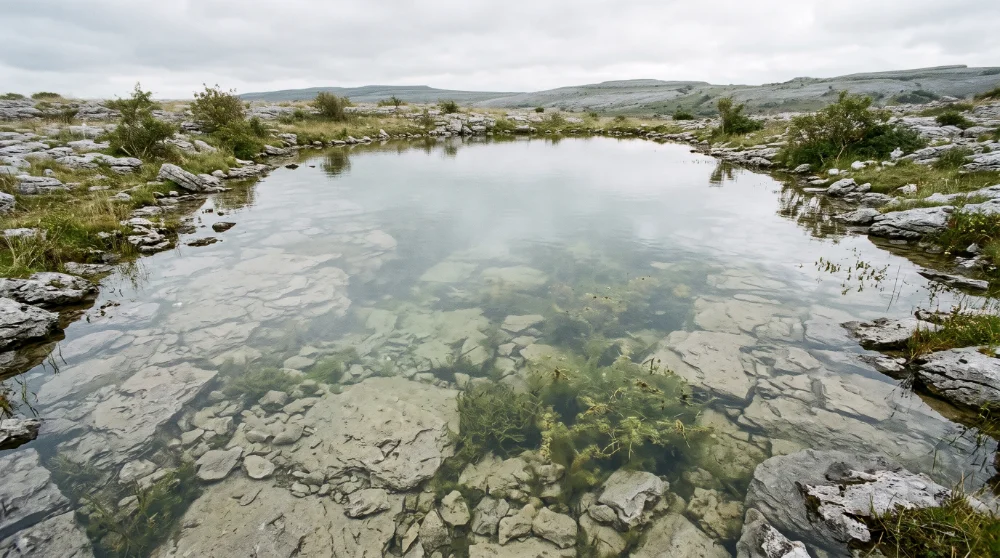
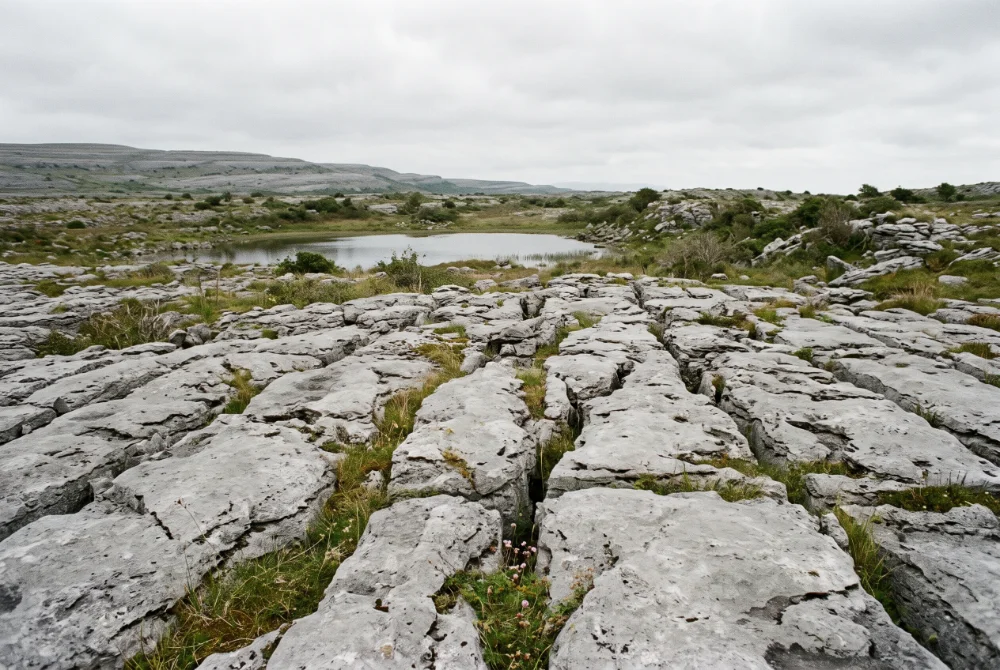
The Burren’s turloughs are seasonal lakes formed on karst limestone. Their water level can go up and down by several metres at times. Where water stays longest, in pools that become left behind as levels drop, stonewort communities can grow. The shallow lakes in the region are full of calcium carbonate, which is what species like Dwarf Stonewort and Lesser Bearded Stonewort need to survive.
The 1992 Red Data Book of Britain and Ireland stoneworts says that the turloughs of Ireland are an important habitat for plants and animals. It also shows that the biggest threat to these small bodies of water is natural change, which can turn them into fens, marshes or reed swamps. The threat is to the environment, not to chemicals. It is about plants gradually covering up open water, not about pollution or direct destruction.
The Red Data Book also says that Dwarf Stonewort is able to survive at one site thanks to peat cuttings that are taken regularly. This is important because it shows that the species can rely on disturbance to keep the bare peat surfaces it needs. If there is no disturbance, this can be as bad as if there is a disturbance, but in the wrong form.
The Project and How It’s Funded
The Targeted Aquatic Plant Project has been running for seven years. Its stated aims are to improve how well people can identify water plants and to increase the amount of data recorded across Ireland. The NPWS’s funding is used for two things. First, it pays for surveys to check on rare and important species. Second, it raises awareness about water plants. The project organises events for botanists of all levels, including beginners. The Poulroe field meeting was led by Nick Stewart, who knows a lot about water. Anyone could take part, even if they had never done it before.
The work of the season was not just in the Burren. Earlier in the summer, an outing to Durnesh Lough in County Donegal recorded Bearded Stonewort (Chara canescens). There were also events in Wexford, Waterford, Sligo and Carlow. The project’s structure is not about one-off discoveries. It is about keeping records for a long time in different places.
What the finding means and does not mean
This discovery does not change the conservation status of the Burren or of either rare species. It adds to the information we already have about what is present in a habitat that is already known to be important for its environment. Gráinne O’Brien’s statement on the find was more about the importance of funding for monitoring than about how important the species are themselves: “These results show how important it is to fund projects like this, where we can spend time and use our skills to watch rare species, some of which have not been seen for a long time. It also shows how important it is to keep protecting special places where rare animals and plants live, like the Burren.
The finding is just one piece of information. It confirms that two rare species are still at a site where they had been recorded before, or at least where they can live. This doesn’t show that the species are growing or that the environment is getting better. It shows that if a survey is properly funded and targeted, it will produce records.
The situation with stonewort conservation in Ireland is not as good. A 2026 European report on hard oligo-mesotrophic waters with benthic vegetation of the Chara species found that 94 per cent of such lakes within the Water Framework Directive network are unlikely to meet their environmental objectives of achieving good status, or are suffering from deterioration in water quality. This figure is for lakes, not turloughs, and it is about water quality, not direct habitat destruction. But it shows that the pressures on stonewort habitats are not just limited to the Burren or the specific threats identified in older assessments.
The record has been reached.
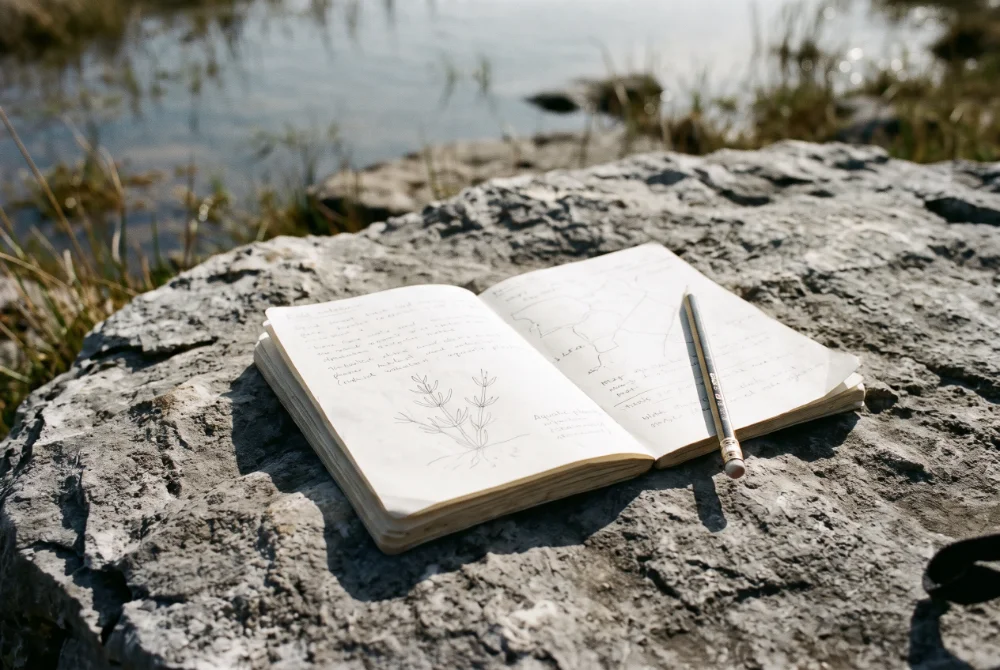
The Poulroe find is a useful reminder of how little is known about this. During one field meeting, six different types of stonewort were recorded at one site, two of which are rare. The record exists because a project was funded, a meeting was organised, and someone with the skills to identify stoneworts was present. The fact that there are no similar records from other sites does not mean that those sites have no rare species. This means they have not been surveyed as thoroughly.
This is the practical argument for keeping up funding for survey work. It is not an argument that the environment is in crisis or that the situation is improving. The argument is that the basic data is incomplete, and that decisions about conservation are made based on incomplete information. The Poulroe record provides more information on this. It doesn’t finish it.
Information from:
Botanical Society of Britain and Ireland. “Rare stoneworts have been recorded in Co. Clare.” This is the 28th of October 2026.
Botanical Society of Britain and Ireland. This is an update about the Targeted Aquatic Plant Project, made in September 2026. This is the 25th of September 2026.
Joint Nature Conservation Committee. “Red Data Books of Britain and Ireland: Stoneworts.” This happened in 1992.
Reporting on Article 17 of the European Environment Agency / Ireland. “Habitat 3140: Hard oligo-mesotrophic waters with benthic vegetation of Chara spp.” The year is 2026.
Botanical Society of Britain and Ireland. This is an update about the Targeted Aquatic Plant Project, from August 2026. This is the 28th of August 2026.