The Environmental Protection Agency published its Drinking Water Quality in Public Supplies 2025 report at the end of June 2026. The message is simple: the water supply in Ireland is still fine to drink. The compliance rates were pretty high, at 99.8% for microbiological parameters and 99.7% for chemical parameters. These figures cover over four million people connected to public supplies.
The report also has a second set of numbers that don’t get as much attention. At the end of 2025, the EPA had 35 public water supplies on its Remedial Action List. That list tells you which plants need upgrades or changes to get them up to scratch. The figure went down from 45 at the end of 2024, so things are looking up, but the other plants are still serving communities all over the country.
The reasons for inclusion vary. Trihalomethanes, a group of chemicals that can be produced when organic matter reacts with chlorine during treatment, account for a significant share of the list. The EPA found THM levels were above the limit in 24 supplies in 2025, when they were checking things out as part of the rules. Other supplies are on the list because of turbidity issues, cryptosporidium risk, or treatment capacity problems. The EPA’s report lists each supply, the population it serves, and the proposed completion date for the action plan. Some of the projects are set to run until 2029 and beyond.
So, what’s actually in the RAL?
The Remedial Action List isn’t a list of supplies that are currently unsafe. It’s a list of supplies that are known to be at risk and where the EPA is asking Uisce Éireann to take corrective action. The EPA has told Uisce Éireann to come up with a plan to improve these supplies, and has started legal action where plans weren’t being made or weren’t being made properly. That can include giving legally binding instructions that say exactly what work needs to be done.
The geographic spread is wide. The list includes West Clare, where two plants serve a combined population of over 12,500 and have completion dates of 2030 and 2032 for THM-related works. Castletownbere in Cork, which has 2,461 people, needs to install granular activated carbon to get rid of organics and reduce THM formation, and the project should be finished by March 2029. Glashaboy in Cork, serving over 25,000 people, needs to upgrade its water treatment plant, with a completion date of December 2026. Newmarket in Cork, which serves more than 10,000 people, needs to get UV disinfection for cryptosporidium sorted by December 2027.
It’s important to consider the range of completion dates. Some of these supplies have been on the list since 2008. Caragh Lake in Kerry, which serves 1,976 people, is set to have its water treatment plant upgraded by March 2026. Some others were added more recently, like An Mhin Aird No. 1 in Kerry, which was added in Q4 2024 for THM issues. The action programme is still to be submitted by Uisce Éireann.
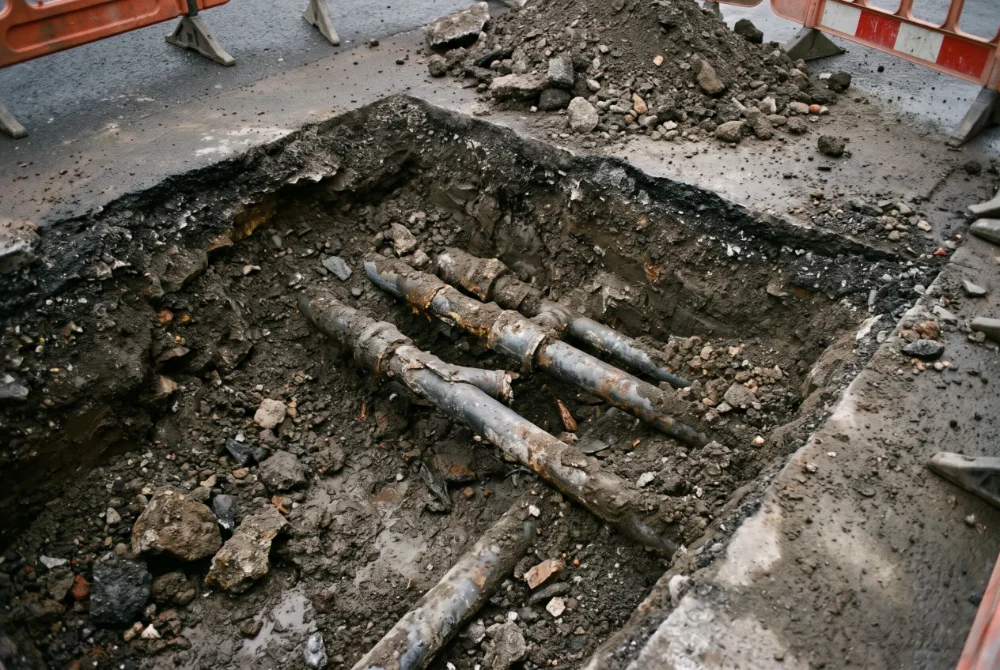
Just to let you know, there are currently Boil Water Notices and restrictions in place.
The report also says that 66 areas had to have their water boiled and 34 had water restrictions in 2025. This affected about 189,000 and 2,000 people. Twenty-eight of those boil water notices were in place for over 30 days. The EPA says these are long-term notices, meaning they require investment in infrastructure rather than quick operational fixes. The figure of 28 is down from 33 in 2024, so there has been some improvement in the duration of notices, even as the total number of notices increased.
You can find more info in Uisce Éireann’s own account of the year. The utility says it put out 46 boil water notices for public water supplies in 2025, nine of which were needed after Storm Éowyn. Despite the weather, 45 notices were lifted during the year, with almost three-quarters of those issued in 2025 resolved within 30 days. By the end of the year, just six notices were left, affecting about 538 people.
The difference between the EPA’s figure of 66 and Uisce Éireann’s figure of 46 is interesting. The EPA’s total includes notices carried forward from previous years and property-specific notices, while Uisce Éireann’s figure refers specifically to notices issued on public water supplies during the year. Both figures are spot on for what they’re meant to be used for, but they do describe slightly different things.
We’ve got to keep an eye on lead and leakage.
The EPA’s main things it’s doing for Uisce Éireann are replacing lead connections that everyone can see and finishing off putting orthophosphate dosing in place. Lead in drinking water is a problem that builds up over time and can harm human health. The EPA has said that not enough progress has been made in removing lead from the supply network. The legal limit for lead in drinking water will be cut in half by 2036, from 10 micrograms per litre to 5 micrograms per litre. This means that, as well as making sure we’re up to date with current compliance, we also need to think about future standards.
Leakage is another infrastructure issue, along with water quality. The EPA says that the leakage rate is 36% across the country, according to a 2024 review. That’s the amount of water that’s treated but never gets to the customer. Reducing leakage might not make the water quality at the tap better straight away, but it does mean less water needs to be treated and taken from the source. This is good news for keeping the supply going during dry periods or times when demand is high.

The Investment Context
In 2025, Uisce Éireann splashed out over €1.4 billion on sprucing up water and wastewater treatment plants and networks. You can see that investment in the RAL figures: ten supplies were taken off the list in the year after the improvement works. Uisce Éireann reckons that 14 of the last 35 supplies will either be taken out of the RAL or will be ready for the EPA to check out by the end of 2026.
The utility has upped its monitoring game too. The National Operations Management Centre now keeps an eye on alarms at 643 water treatment plants, which serve a population of 4.4 million people. That’s up from 517 plants serving 3.8 million people in 2025. That expansion doesn’t change water quality directly, but it means treatment failures or irregularities can be identified faster. This can mean that when problems do occur, the duration of boil water notices is reduced.
Here’s the thing the report doesn’t mention:
The EPA report doesn’t say that drinking water is unsafe. The compliance figures for microbiological and chemical parameters are high by any reasonable standard. The report doesn’t say there should be any emergency measures or that we should all change how we use tap water.
The report does say that the infrastructure behind the supply needs to be kept safe and so needs investment. The 35 supplies on the RAL are not failing health standards at the moment, but they are at risk of doing so without intervention. The completion dates that go all the way to 2029, 2030 and 2032 show there’s a lot of work to do. The report doesn’t say if the work is happening quickly enough to deal with the risks, especially as climate change is making it harder to get water and treat it.
Patrick Byrne, the EPA’s director, was pretty clear about it: public drinking water quality is still top-notch, and people can rest assured that the water supplied to their homes is safe to drink. He also said that Uisce Éireann has to make sure it has the money and people to upgrade supplies that might be at risk, so that people can be sure their drinking water is safe and they’ll be protected in future. The report’s main finding is that the formulation is safe now, but it needs investment to stay that way. This is a more accurate summary than the headline compliance figures or the RAL count taken alone.
Sources
The EPA, or the Environmental Protection Agency to give it its full name. ‘Drinking Water Quality in Public Supplies 2025’. June 2026.
The EPA, or the Environmental Protection Agency to give it its full name. The EPA’s Drinking Water Remedial Action List for Q4 of 2025. 2026.
Irish Water. “Uisce Éireann is pleased with the EPA report that shows we’re still making great strides in making sure everyone has clean, safe water to drink.” 30 June 2026.
The EPA, or the Environmental Protection Agency to give it its full name. The EPA says that while the quality of drinking water is still good, it needs to become more resilient. 30 June 2025.
Smart Water Magazine. Ireland’s drinking water is still safe to drink, but the EPA is asking for greater resilience. 1 July 2026.