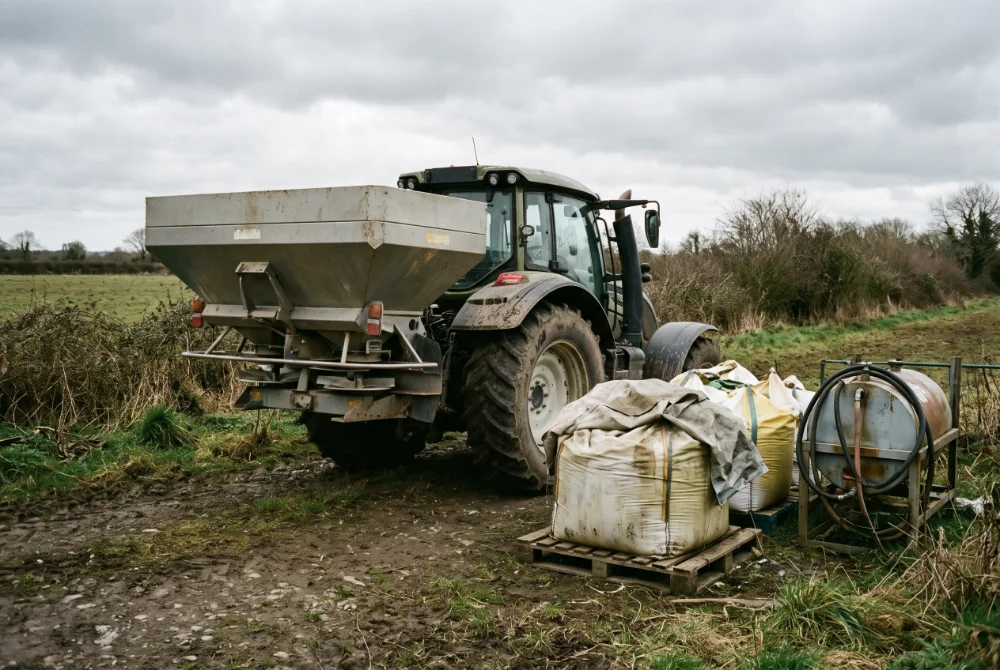
The Teagasc report published in late September 2026 has a title that is almost too formal: “The 2026 Drought and What Happened Afterwards: Impact and Recovery in the Irish Outdoor Vegetable Sector.” The numbers inside are less restrained. Crops that don’t have access to water lost 25 to 40 per cent of their yield and quality. Growers who had access to water spent over €2,700 per hectare on water alone for some crops, before equipment and infrastructure costs were counted. Only 30 to 35 per cent of the area used for growing vegetables has enough water.
The report does not see these figures as a warning about the distant future. It describes what has already happened and what is likely to happen again.
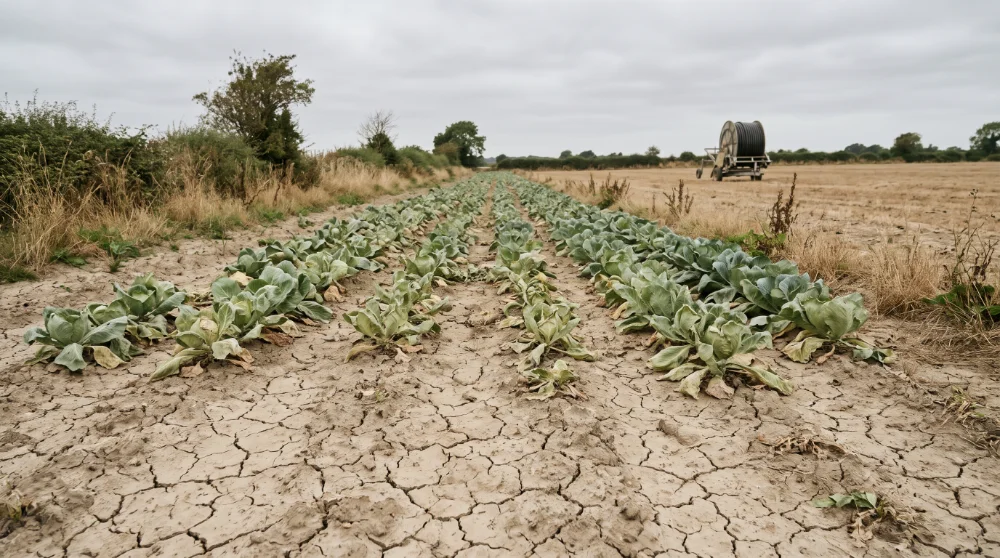
This is what the drought actually looked like.
In July 2026, Ireland experienced its second-hottest July on record, with temperatures 1.87 degrees Celsius above average. By the end of July, 20 of Met Éireann’s 25 weather stations showed that there was no rain at all, and this was mostly in the middle, south and east of the country. In Oak Park in County Carlow, which is in the middle of the area where root crops are grown, there was a drought that started on 20 June and lasted for 66 days. It ended on 24 August. It was the longest period without rain in Ireland since 1941.
In mid-August, the soil in the main vegetable-growing areas was 70 to 100 millimetres dry. Dublin, Meath, Louth, Kildare, Carlow, Kilkenny, Wexford, Waterford, Tipperary and Cork. The weather service says that this is a drought. The north and north-west had slightly less rain, at 10 to 40 millimetres. But most of this rain fell outside the main vegetable areas, so it did not help the areas that needed it most.
The drought ended in the third week of August. Rain returned, and by early September the soil in the southeast was 5 to 20 millimetres below its usual moisture content. But the report is clear that the rain did not undo the damage. If plants are lost, crops fail, planting is delayed or growth potential is lost, these problems cannot be fixed by rain.
The Irrigation Gap: Built in Two Weeks, Tested by Nine
The main finding of the Teagasc report is not that irrigation failed. The irrigation system was designed for a different kind of drought.
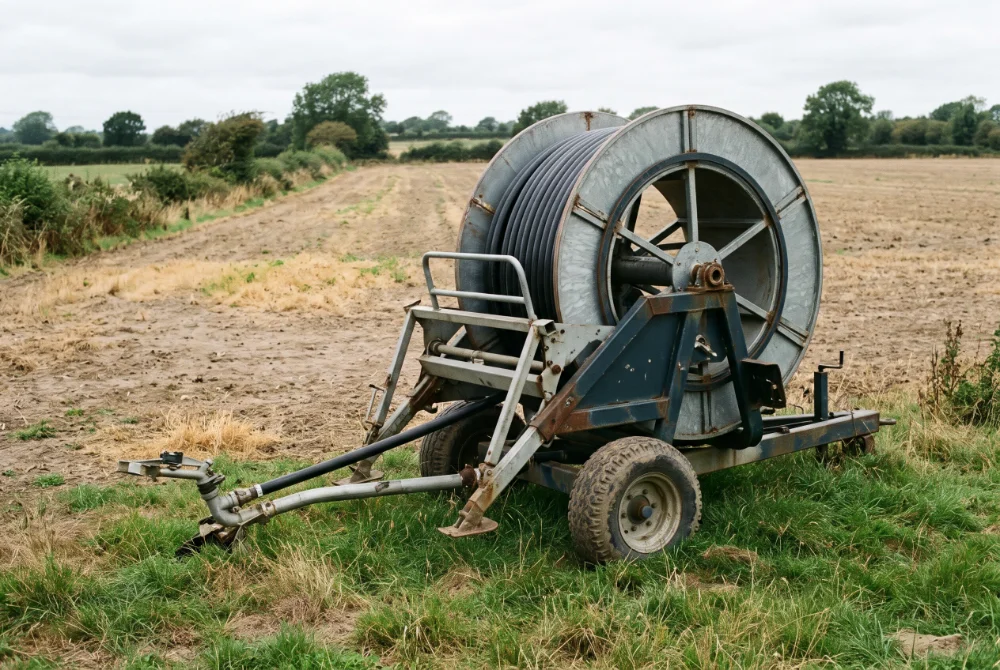
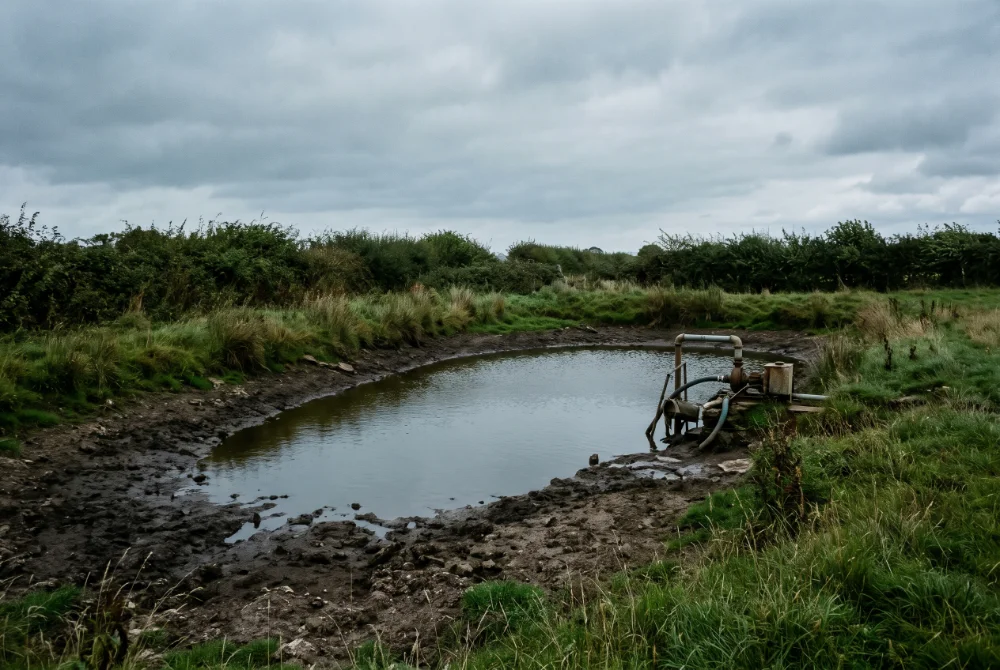
Many farmers bought more water for their crops after the 2018 drought. That investment was a good size for a fortnight or three weeks of extra watering for some of a farm’s crops. It wasn’t big enough for the demand caused by a drought that lasted eight to nine weeks and affected almost all of the area where crops are grown.
The report says that even well-equipped growers found their ability to grow tested by how long the 2026 event lasted. The problem is not just about having water. The capacity of an area depends on a number of things, including the equipment, infrastructure, labour, location and soil type. A grower with a borehole and a pump but no storage, or storage but not enough people to run the system all the time, is not able to cope in real life.
Eoin Sweetman, a vegetable expert working with Teagasc’s Horticulture Development Department, gave a clear cost estimate. Farmers with access to water were using it four, five or even six times more than normal. For some crops, this meant extra costs of between €1,380 and €2,070 for each hectare of land because of extra watering. Even on irrigated land, the quality of the crop was inconsistent and not good enough. Farmers often had to pay more to produce less of what they could sell.
The report’s estimate of €2,700 per hectare in water costs for some crops is not an average. It is a high-end figure that reflects the number of applications required. Carrot farmers needed to use water seven or eight times for each hectare of land. This cost between €2,415 and €2,760 before they had to pay for the machinery, equipment and infrastructure. Other vegetable crops needed between six and eight applications of water, which added up to bills of between €2,000 and €2,800 for each hectare of land.
What was lost, and what happens next?
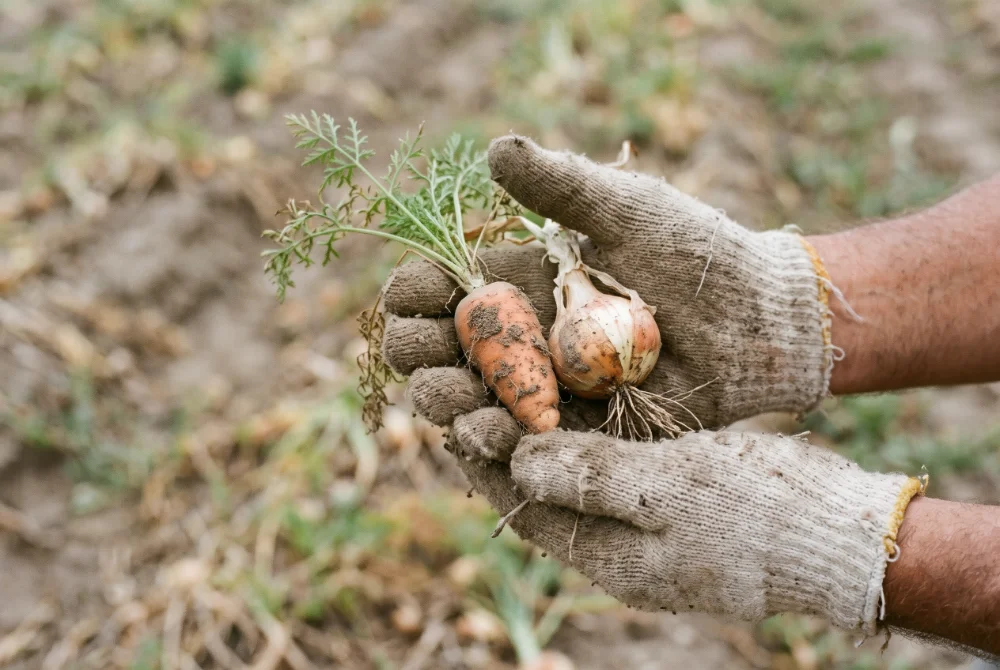
The effect on each crop was different. In the worst-affected fields, the water supply for growing cabbage was so poor that the crop was lost in some places, with losses of up to 40 per cent. Carrot production dropped by about 25 to 40 per cent in areas where farmers couldn’t use irrigation. The amount of parsnip harvested was about 20 to 30 per cent less than usual. Some of the cauliflower was completely lost. Onions that didn’t have water on them produced only 60 to 65 per cent of what they usually produce. There are a lot of Brussels sprouts at the Christmas market this year, but they don’t look as good as they usually do because there hasn’t been much rain recently. This means that they have fewer little sprouts.
Since late August, the recovery has been uneven. Some crops are now being produced at or above what is needed in the immediate market, and the quality of several brassica crops is said to be excellent. Sometimes, too many crops are produced. This can lead to crops being destroyed or used for other purposes because it costs more to harvest and sell them than people are willing to pay.
But the report says not to think that this is a complete recovery. The main risks have changed. There may be gaps in the supply because some plantings have been delayed or abandoned. There will be a lot of supply where crops that were planted later all ripen at the same time. The amount of wine that can be sold is reduced because of problems with the quality and how the wine is described. It costs more to produce things like fruit and vegetables using irrigation, and to pay people to work in the fields. It also costs more to use machines and to pick and pack the fruit and vegetables. There is still a risk of supply problems in winter for Brussels sprouts, winter cabbage, leeks, carrots, parsnips and swedes. Storage is a problem for onions and some root crops.
The report says that the main issue is about continuity, specification and timing, not a lack of product. There may be more or less of some things at different times of the year, and sometimes this happens with different types of crops at the same time.
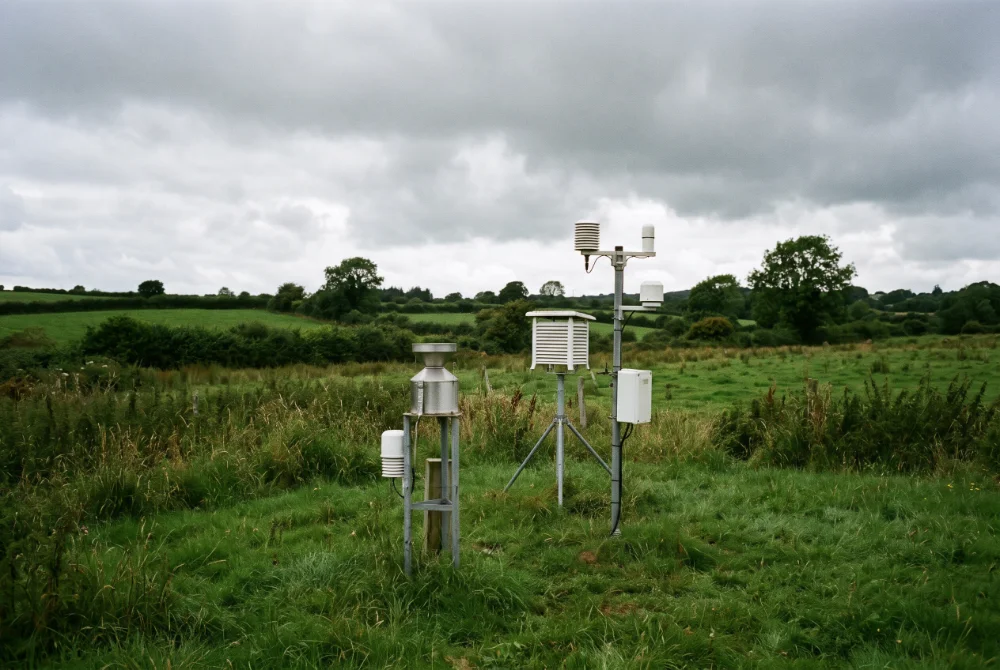
The Wider Pattern: This is not an anomaly.
Dermot Callaghan, the head of Teagasc’s Horticulture Development Department, used a phrase in the report’s launch that a lot of people have quoted since then. He said 2026 was not a one-off. “It was just a practice run, and it wasn’t just for Ireland.”
The report puts 2026 in a sequence. This comes after the hottest summer ever recorded in 2025, which was the second summer in a row to be this hot. It is in a period of drought: 2018, 2020, 2022 and 2024. These have been testing how well Irish farming can deal with wet weather.
The pattern is not only about drought. Farmers are seeing more extreme weather, like heavy rain, flooded soils, heatwaves and storms. Irish climate experts are saying that summers are going to be drier, while autumns and winters will be wetter. This means that a sector designed for a stable, temperate climate is now operating in a climate that produces both too little water and too much, often in the same year.
Callaghan’s conclusion is clear. How much water is needed for irrigation needs to change to match the climate. Ireland has plenty of water every year, unlike many other countries in Europe. What we need is the infrastructure to manage it according to the types of crops that are grown at different times of the year. We need to start working to close that gap now, because the next event of this size is not something we can plan for any more. It is certain that you will need to prepare.
The questions that Teagasc asks
The report does not give specific recommendations. It asks a few simple questions to get growers, industry experts, advisers, researchers and policymakers talking. This is about how to adapt to climate change in the future. It is part of the National Adaptation Framework 2024 and the Department of Agriculture’s Sectoral Adaptation Plan 2025.
The questions are about evidence and data, investment pathways, collaboration at the local level and how crops can deal with long-term changes. The choice to ask questions instead of giving recommendations is interesting. The evidence from 2026 is clear. It’s not so clear who pays for the infrastructure, how water storage and delivery are organised at the catchment level, and what kind of policy framework would make it worth investing in resilience for growers who don’t have much money.
The report also says that similar drought and water restrictions affected farmers in the UK and Europe this summer. This finding is important for Ireland, because it shows that the country relies on imported food. If there is more variation in domestic production, the supply chain can’t just move somewhere else without incurring extra costs. It relies more on imports, which are affected by the same weather patterns.
The report doesn’t mention the following:
The Teagasc report does not suggest that Irish vegetable production is falling. It does not require any urgent action. It doesn’t blame any one person. It describes a sector that did well where there was irrigation and did badly where there was not. It also looks at how the climate is changing, which makes it more likely that the 2026 experience will happen again.
The report is calm, but the numbers it contains are not. Losing 25 to 40 per cent of your crops when you don’t have water is a big problem. It costs €2,700 to water each hectare of crops, which many growers cannot afford. The fact that only a third of the production area has enough capacity is a big problem.
The report doesn’t say if the response to 2026 will be a real change in investment and policy, or just another version of adapting for the last drought instead of the next one.
Information from:
Teagasc. “The 2026 Drought and What Happened Afterwards: Impact and Recovery in the Irish Outdoor Vegetable Sector.” This is the 24th of September 2026.
Teagasc. “Climate Adaptation: The Bigger Picture for the Irish outdoor vegetable sector.” This is the 23rd of October 2026.
Agriland. “Irrigation costs go up as 2026 drought hits Irish veg sector.” This is the 23rd of September 2026.
Irish Farmers Journal. “Droughts can cause veg growers to lose up to 40% of their crops, or they might have to pay more for water.” This is the 23rd of September 2026.
Teagasc. The full report on the 2026 Drought and Its Aftermath is available to download as a PDF. The date is 2 September 2026.